

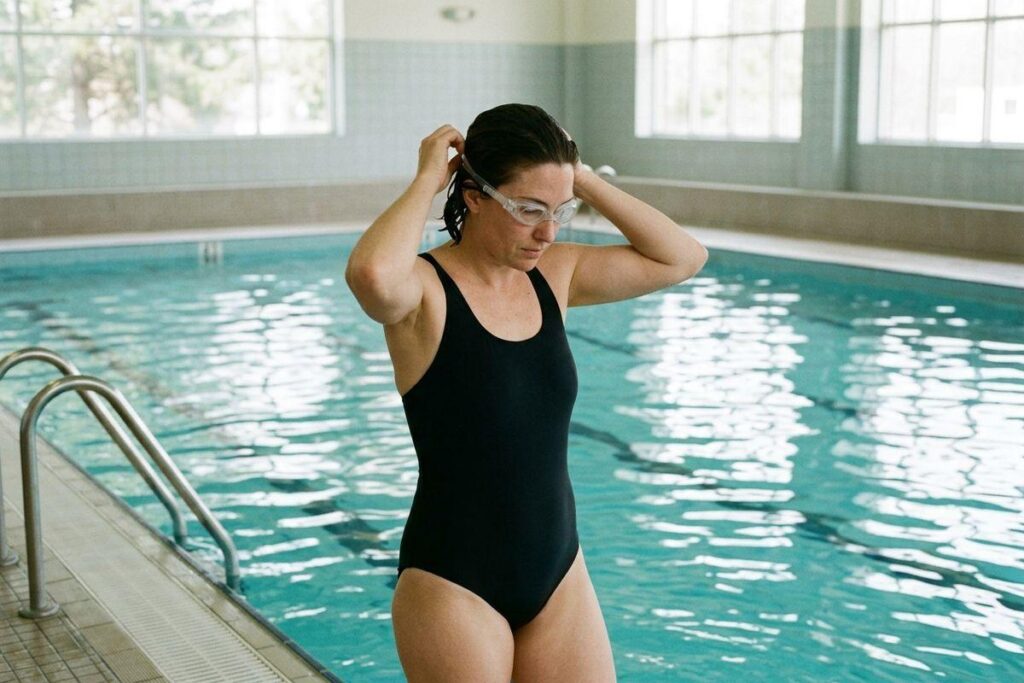
Swim season brings up the question of what to do with contact lenses, usually right before a family vacation or the first week of lessons at the rec centre. Leaving your contacts in feels easier than hunting for your glasses on a wet pool deck.
Swimming in contact lenses isn’t recommended, because water can hold bacteria against your eye and change the way your lenses fit. A contact lens exam and fitting can open up better options for the water.
Why Water and Contact Lenses Don’t Mix
Soft lenses are porous, which means they soak up whatever they’re sitting in and swell. A lens that felt like nothing at 9 a.m. can feel tight, sticky, or gritty by the time you’re drying off.
Water carries bacteria and other tiny organisms along with it. Your lens traps them against the surface of your eye instead of letting a blink rinse them away, and keeping lenses away from water is one of the first things we go over at a fitting.
Chlorine handles plenty in a pool. It doesn’t clear out everything floating in there, though, and it strips moisture from your lenses while it works.
What Can Happen if You Swim in Your Contacts
Many swims can happen without any trouble at all. When things do go wrong, however, they can go very wrong. The bigger concern is a rare eye infection called Acanthamoeba keratitis, caused by an organism that lives in fresh water, tap water, and soil. Treatment can stretch on for months.
Everyday irritation shows up far more often. Your eyes usually tell you when something’s off, sometimes hours after you’ve towelled off. Watch for a few of these:
- Redness that won’t settle down
- A gritty or burning feeling
- Blurry vision
- Sensitivity to light
- Watery eyes or discharge
Give us a call if any of that continues past a day.
Pool, Lake, and Ocean Water All Carry Risk
Fresh water tends to hold more organisms than treated pool water, so lakes, rivers, and even a backyard rain barrel come with the most caution attached. Salt water pulls moisture out of a lens fast. Your eyes can feel dry and scratchy for hours afterward, long after the beach towels are packed away.
Hot tubs deserve their own mention. Warm water helps bacteria multiply, and the heat makes a lens cling more stubbornly to your eye.
Swimming isn’t the only thing to think about, either. Take your lenses out before you shower or rinse your face, because tap water isn’t sterile and brief contact is enough to raise the risk.
What to Do if You Already Swam in Your Contacts
One swim doesn’t mean something’s wrong. A few small steps can help your eyes settle:
- Take your lenses out as soon as you’re on dry land
- Throw away disposables rather than reusing them
- Disinfect reusable lenses with fresh solution, never water
- Wear your glasses for the rest of the day
- Book an exam if redness, blurriness, or irritation sticks around
Do Prescription Swim Goggles Work?
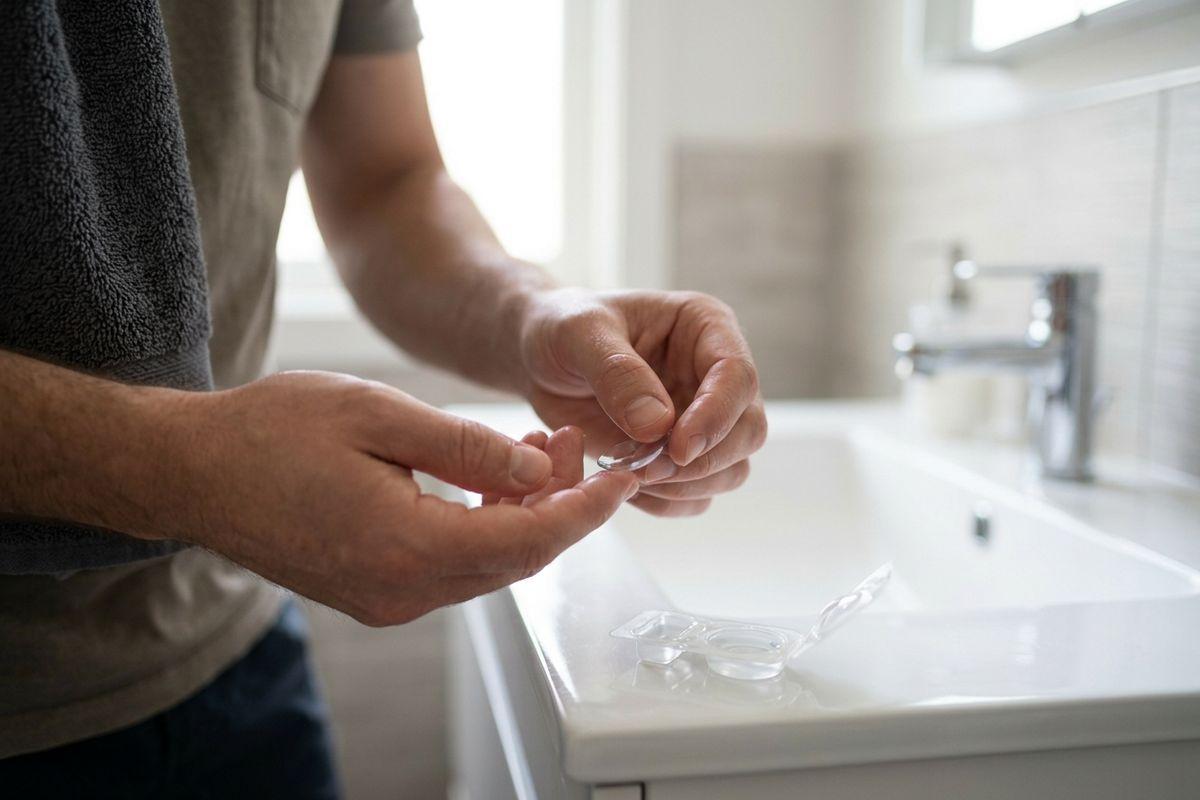
Prescription goggles solve the whole problem with no lens involved. We fit them in the clinic, so you can read the pace clock on the wall or spot your kids at the far end of the pool. We can sort out options for nearsightedness and farsightedness, plus UV filters if you swim most of the time outdoors.
Lap swimmers logging early morning kilometres usually notice the difference first. Kids in swim lessons do well with them too, since following an instructor’s demonstration through blurriness can make learning a hard skill even harder.
Other Ways to See Clearly Around the Water
Goggles aren’t the only route. What suits you comes down to how much of the day you spend in the water and how much of it you spend beside it.
Daily Disposables and Sealed Goggles for Swimmers
If contacts are already part of your routine, daily disposables let you start with a fresh pair after every swim instead of putting a soaked lens back in your eye. If you pair them with goggles that seal properly, you can keep most of the water out to begin with.
Bring it up at your next fitting. Some prescriptions work better in a daily than others, and we’d rather match you to something comfortable than have you guess at the pharmacy shelf.
Glasses and Sunglasses for Poolside
Once you’re out of the water, the fun starts. Designer frames don’t have to sit out of reach, and our optical team can walk you through shapes, colours, and fits that suit your face and your budget in a single visit.
Prescription sunglasses are an excellent accessory for lounging poolside or on a boat, cutting the glare that bounces off the water’s surface. Ask your optometrist about lens choices based on how you actually spend your days, whether that’s screen time at the office or weekends out at the lake.
Polarized lenses are worth a conversation if you fish or paddle. They can cut reflected light in a way regular tinted lenses can’t.
See Clearly at the Pool This Season
Clear vision in the water and a pair of frames you love can come out of the same appointment. Book an eye exam at Castledowns Vision Centre, ask about prescription goggles, and take your time browsing the optical boutique with one-on-one help from our team.
Get it sorted before your next swim, and the rest of the season can look a whole lot clearer!